
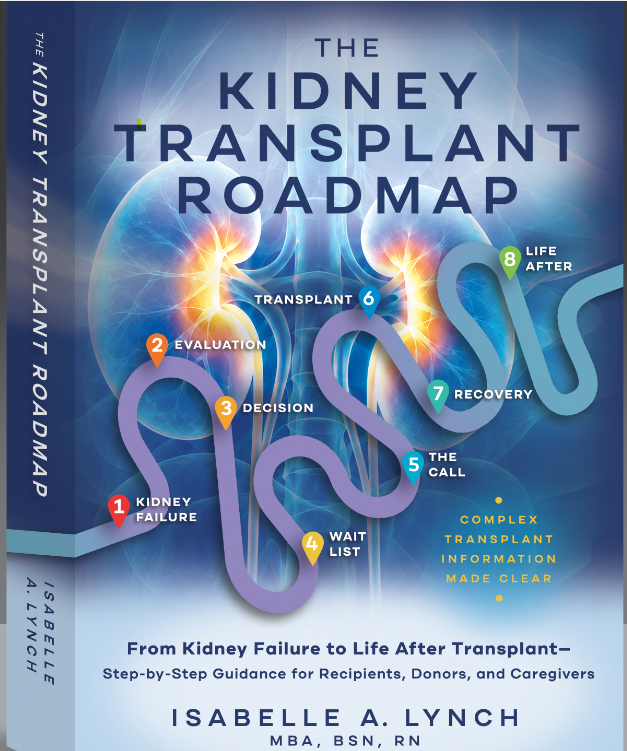
One Comprehensive Guide for the Full Kidney Transplant Journey
Kidney transplant involves a lot to learn, remember, plan for, and keep track of—and what you need changes as you move through each stage. The Kidney Transplant Roadmap brings that information together in one comprehensive, step-by-step guide you can return to as your needs change.
Instead of trying to piece together information from different websites, handouts, appointments, and other sources, the book takes you through the major stages of the journey—from kidney failure and considering transplant through evaluation, waiting, surgery, recovery, and long-term life after transplant.
And it goes beyond explaining what happens. Step-by-step guidance is supported by checklists, worksheets, trackers, logs, planning tools, and questions to help you prepare, stay organized, keep track of important information, and know what to consider as you move through the transplant journey. Each major stage also includes a concise guide to what matters most at that point—what to focus on, what to prepare for, and what may come next. You do not have to remember everything at once.
For candidates and recipients: Kidney failure, treatment and transplant options, evaluation, the waitlist, preparing for the call, transplant surgery, hospitalization, recovery, medications, follow-up, possible complications, and long-term life with a transplant.
For potential living donors: Evaluation, informed decision-making, testing, surgery, recovery, planning for time away from usual responsibilities, and long-term follow-up.
For caregivers and families: Preparation, organization, communication, caregiving responsibilities, planning for transplant and recovery, and the realities of supporting someone through the journey.
The Roadmap also addresses parts of transplant that can be easy to overlook when the focus is understandably on medical care—including preparing for appointments, keeping medications and follow-up organized, planning for recovery, communicating with the transplant team, and managing transplant care alongside everyday life.
You do not need to learn the entire transplant journey at once. The Roadmap gives you one place to turn when you need to understand where you are, prepare for what comes next, or return to information you may not have needed until now.
Look inside
Ten parts. One continuous journey.
Tap any part to read how it opens and see what it covers.
Before you beginA Note to the Reader
You are about to take an important step: preparing for a journey that will change your life or the life of someone you love. The road ahead may include understanding kidney disease and treatment options, completing the transplant evaluation, waiting, planning, surgery, recovery, and the ongoing work of living with a transplant. It will also bring experiences that others cannot always see—fear, uncertainty, hope, fatigue, adjustment, and the quiet strength it takes to keep going when life no longer feels simple.
In this part
- How to use this book
- Your transplant journey roadmap
- The disclaimer and what this book is—and is not
Part OneUnderstanding the Kidneys and Kidney Disease
Understanding what your kidneys do—and what changes when they are no longer working well—can make the decisions ahead feel less unfamiliar.
Part One introduces kidney function, kidney disease, and the healthcare professionals who may become part of your care. It also explains the language and information you are likely to encounter as you learn about your condition.
You do not need to understand everything at once. The goal is to help you ask questions, recognize what matters, and take part in conversations about your health.
In this part
- Your Kidney Healthcare Team
- How Your Kidneys Are Supposed to Work
- What Changes When Kidneys Don’t Work Well
- End-Stage Kidney Disease (ESRD)/Kidney Failure
- Treatment Options When Kidneys Fail
- Chronic Kidney Disease—What the Numbers Mean
- Planning Ahead for End-Stage Kidney Disease (ESRD)
Part TwoDialysis and Preparing for Treatment
When kidney disease advances, treatment decisions can bring new questions about daily life, timing, and what comes next.
Part Two explains dialysis and the preparation that may be needed, including practical considerations such as insurance and access to care. It is intended to help you understand the options and discuss them with your kidney team.
Whether you are preparing for dialysis, already receiving it, or exploring transplant, knowing what to expect can make planning more manageable.
In this part
- How Insurance Affects Your Dialysis Journey
- When Dialysis Is Usually Recommended
- Dialysis Options
- Dialysis Access
Part ThreeConsidering Kidney Transplant
At this point in the journey, the conversation begins to shift from managing kidney failure to considering whether transplant may be part of the path forward.
Part Three explains what kidney transplant is, when it may be considered, what eligibility can involve, and how patients and families can begin preparing without feeling rushed.
In this part
- What Is Driving Your Decision to Pursue a Kidney Transplant?
- What Is a Kidney Transplant?
- When to Consider Kidney Transplant
- Dialysis vs. Transplant
- Transplant Eligibility
- Finding a Kidney Transplant Center
- How Insurance Affects Your Kidney Transplant Journey
Part FourEvaluation, Approval, and the Waitlist
Transplant evaluation involves more than a single appointment or test. Your transplant team considers your overall health, discusses possible risks and benefits, and helps determine whether transplantation is an appropriate option for you.
Part Four walks through evaluation, decisions about approval, and what it means to be placed on the waiting list. It also explains why additional testing or follow-up may be needed along the way. Understanding the process can help you prepare, stay organized, and know which questions to bring to your team.
In this part
- Kidney Transplant Evaluation
- Common Evaluation Bottlenecks
- The Kidney Transplant Waitlist
- Understanding Wait Time
- Multi-Listing: Being Listed at More Than One Transplant Center
- Staying Active While You Wait
- Stay Ready for the Call
Part FiveInsurance, Financial Planning, and Hidden Costs
Planning for a kidney transplant includes planning for the costs of care before and after surgery. Insurance rules, medication coverage, travel, time away from work, and other expenses can affect patients, living donors, and families in different ways.
Part Five helps you identify questions to ask, people who can assist, and steps to take before a financial problem becomes urgent. The goal is not to make you an insurance expert, but to help you protect access to the care and medicines you may need.
In this part
- Insurance, Financial Planning, and Hidden Costs
Part SixDonor Options and Living Donation
A kidney for transplant may come from a living donor or a deceased donor, and each path has its own process, decisions, and uncertainties.
Part Six explains donor options, including what living donation can involve for the person considering giving a kidney. It addresses evaluation, informed choice, preparation, and recovery so that recipients, potential donors, and families can understand their different roles.
Donation is a personal decision, and learning about the options should support thoughtful conversations—not create pressure to choose a particular path.
In this part
- Living Donor vs. Deceased Donor
- Direct Living Donation
- Paired Exchange (Kidney Paired Donation)
- Donor Chains and Non-Directed Donation
- Finding a Potential Living Kidney Donor
- Living Kidney Donors
Part SevenThe Transplant Surgery and Hospital Recovery
Surgery day can feel both hopeful and overwhelming, even after months of preparation.
Part Seven explains what donors and recipients may experience around the operation, the hospital stay, and the first steps of recovery. It describes the people and routines involved so that unfamiliar events feel easier to anticipate.
Every hospital and every recovery is different, and your surgical team’s instructions always come first. Use this section to prepare questions, plan for practical needs, and understand what the early days may involve.
In this part
- What Happens on Surgery Day—Donor
- The Call and Surgery Day—Recipient
- Kidney Transplant Surgery
- Temporary Tubes and Drains After Kidney Transplant
- The Hospital Stay and Recovery
- Kidney Transplant Rejection
- Kidney Transplant Biopsies
- Weeks 1–12 After Transplant
- Hydration: Helping Protect Your New Kidney
Part EightMedications, Infection Prevention, and Early Post-Transplant Care
After transplant, caring for the new kidney becomes part of everyday life. Medicines, laboratory tests, follow-up visits, and infection precautions all work together to support recovery and long-term kidney health.
Part Eight explains why these routines matter, what patients and caregivers may need to organize, and when to contact the transplant team with questions or concerns.
There is a lot to learn in the beginning. You are not expected to remember everything immediately; reliable routines and clear communication can help you build confidence over time.
In this part
- Kidney Transplant Medications
- Common Anti-Rejection Medicines
- Infection-Prevention Medicines (Common Early After Transplant)
- Support Medications
- Opportunistic Viral Infections After Kidney Transplant
- Nutrition and Food Safety After Kidney Transplant
- Common Medical Problems After a Kidney Transplant
- Brain Fog, Memory, and Clearer Thinking After Kidney Transplant
- Working Together Across Your Healthcare Team
- Refill Planning, Pharmacy Delays, and Medication Access Problems
Part NineLong-Term Life After Kidney Transplant
Life after kidney transplant is about more than laboratory results and appointments. Your routines, relationships, work, emotions, and expectations may continue to change long after the first weeks of recovery.
Part Nine explores the practical and personal sides of living with a transplant, including the adjustments that patients and families may face over time.
There is no single way to feel about this experience. Understanding common challenges and knowing when to ask for support can help you care for your health while making room for the rest of your life.
In this part
- The Emotional Side of Transplant
- Beyond the Transplant Clinic
- Returning to Work: Gradual, Planned, and Realistic
- Vaccines and Infection Prevention After Transplant
- Skin Protection, Sun Safety, and Dermatology After Transplant
- Sex, Intimacy, and Body Confidence After Kidney Transplant
- Family Planning After Kidney Transplant
- Caregiver Fatigue, Boundaries, and Shared Recovery
- A Caregiver’s Journey
Part TenWhen Problems Happen
Even when you follow your transplant care plan carefully, problems can still happen.
Part Ten explains some of the complications that may arise after kidney transplant, how changes may first appear through symptoms or routine laboratory tests, and why timely communication with your transplant team matters. Understanding what to watch for and when to seek help can make unexpected challenges feel less overwhelming.
Remember, a new symptom or abnormal test result does not automatically mean you did something wrong or that your transplanted kidney is failing.
In this part
- Know How to Reach Your Transplant Team
- Hospital Readmission
- When Kidney Function Declines Again
Tools27 Appendices: Useful Checklists
Practical, easy-to-follow tools to help you stay organized through the transplant process, arranged in the order most people experience it. They are optional and flexible.
In this part
- A. My Kidney and Transplant Team Contact Sheet
- B. Eligibility Checklist
- C. Transplant Center Comparison and Questions Worksheet
- D. Transplant-Financial-Planning Worksheet
- E. Evaluation Tracker: Appointments, Clearances, Results
- F. Caregiver and Transportation Plan
- G. Living Donor Track: If Pursuing Living Donation
- H. Dialysis-to-Transplant Handoff Summary: Bring on Transplant Day
- I. Hemodialysis Session Log: Dialysis Bridge
- J. Peritoneal Dialysis Daily Log: Dialysis Bridge
- K. Access Site Check: HD/PD
- L. Waitlist Stay Ready Checklist and Monthly Maintenance
- M. Transplant Go-Bag Checklist
- N. Discharge Day Checklist: Hospital to Home
- O. First 30 Days After Transplant: Daily Tracker
- P. Medication List and Refill Plan: Keep Updated
- Q. Medication Change Log
- R. When to Call vs. When to Go to the ER
- S. Lab and Vital Signs Tracker
- T. Daily Fluid, Urine, and JP Drain Output Tracker
- U. Insurance, Pharmacy, and Medication Access Problem Log
- V. Travel Plan After Transplant: Quick Checklist
- W. Return-to-Work/School Planner
- X. Long-Term Health Maintenance Checklist
- Y. Pregnancy Planning Checklist
- Z. Pregnancy and Postpartum Monitoring: Kidney Transplant Patients
- AA. Hospitalization, ER Visit, and Readmission Summary
The Website, the Book, and Your Transplant Team
Each has a different role.
KidneyTransplantRN.com gives you clear orientation, useful starting points, tools, and links to trusted resources when you need information quickly.
The Kidney Transplant Roadmap provides the deeper step-by-step education and supporting resources that cannot comfortably fit on a website, organized so you can use the information as you move through the transplant journey.
Your transplant team provides the care that is specific to you, including individualized medical advice, medications, testing, treatment decisions, and instructions from your transplant program.
The Roadmap does not replace your transplant team. It is designed to help you better understand the transplant journey, prepare questions, stay organized, and make more informed conversations with the people caring for you.
Common questions about the book
What is The Kidney Transplant Roadmap?
A step-by-step guide to the full kidney transplant journey, from kidney failure and considering transplant through evaluation, waiting, surgery, recovery, and life after transplant. It includes checklists, worksheets, trackers, and questions to ask your care team.
Who is the book for?
People with kidney disease who are considering or preparing for a transplant, transplant recipients, potential living donors, and caregivers and families.
Is the book available yet?
Not yet. Join the notification list and you will get one email when it is available. It is not a newsletter.
Does the book replace advice from my transplant team?
No. The book and this website are educational. Always follow your own healthcare and transplant teams for decisions about your care.
Who wrote the book?
Isabelle A. Lynch, MBA, BSN, RN, a kidney transplant nurse and patient educator.